
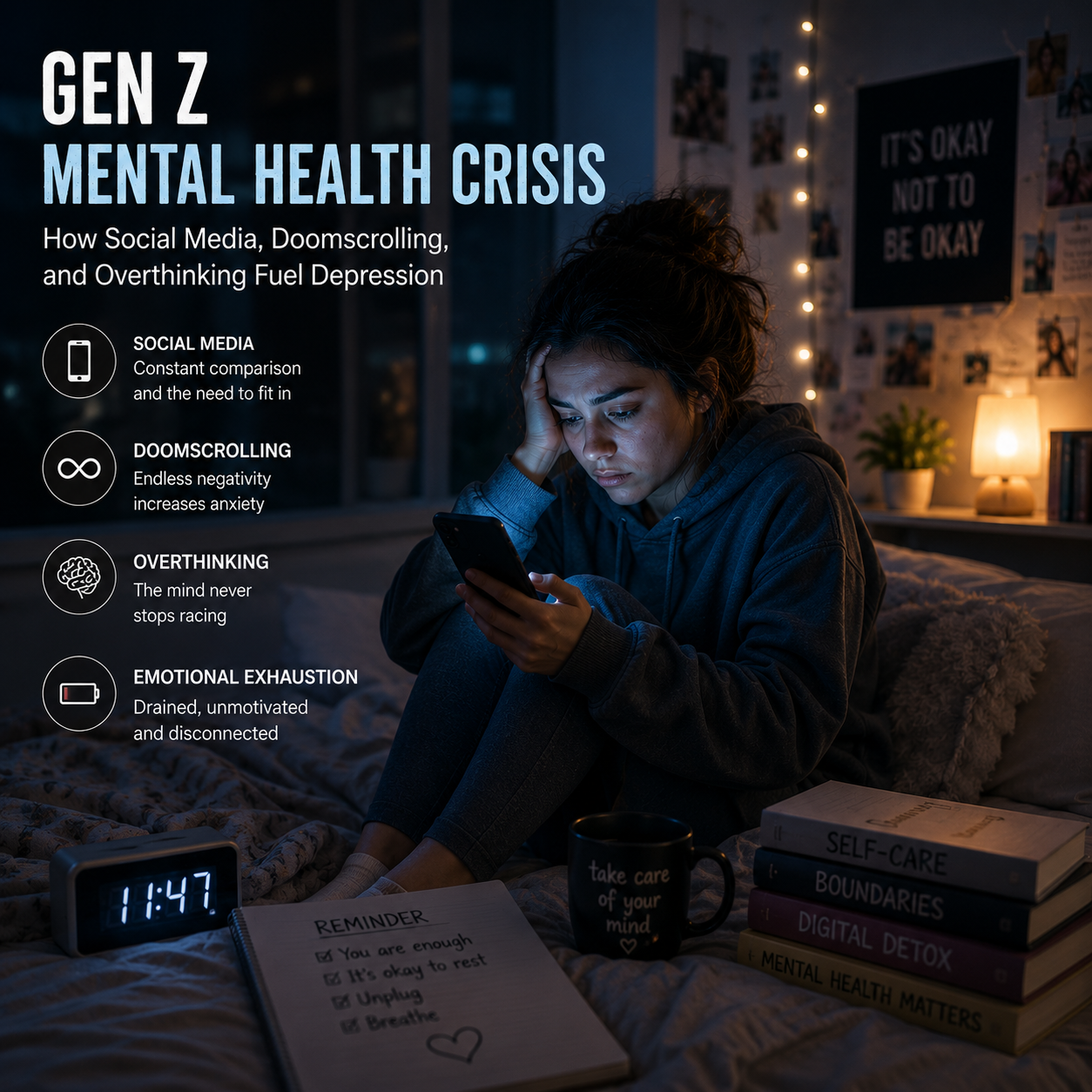
Gen Z Mental Health Crisis: How Social Media, Doomscrolling, and Overthinking Fuel Depression
Doomscrolling refers to the continuous consumption of online content, particularly emotionally charged, negative, or highly stimulating information. Social media platforms are intentionally designed to keep users engaged for as long as possible.
Depression is a mental health condition characterized by persistent sadness, feelings of hopelessness, loss of interest in daily activities, and difficulties in functioning effectively. Anxiety, on the other hand, involves excessive worry, fear, and physical symptoms such as restlessness, sweating, and rapid heartbeat. Reports from across the world indicate that rates of depression and anxiety among Gen Z are considerably higher than those observed in previous generations.
Several factors contribute to this growing mental health crisis. Constant exposure to social media, academic competition, uncertainty about future careers, economic pressures, and global concerns have created an environment where stress and emotional exhaustion have become increasingly common. As a result, many young people find themselves struggling silently while appearing perfectly fine on the surface.
Doomscrolling and Depression: The Hidden Cost of Social Media
What Is Doomscrolling?
Most young people are familiar with the habit of endlessly scrolling through social media feeds. What starts as a quick visit to platforms such as Instagram, TikTok, or YouTube often turns into hours of consuming content without realizing how much time has passed. This behavior, commonly known as doomscrolling, has become a defining feature of the digital age.
Doomscrolling refers to the continuous consumption of online content, particularly emotionally charged, negative, or highly stimulating information. Social media platforms are intentionally designed to keep users engaged for as long as possible by providing an endless stream of videos, reels, posts, and notifications.
How Social Media Affects Mental Health and leads to depression
While social media offers opportunities for creativity, connection, and self-expression, it also creates significant psychological challenges. Young people are constantly exposed to carefully curated versions of other people's lives, making it easy to compare themselves with influencers, celebrities, and peers.
This constant comparison can lead to feelings of inadequacy, low self-esteem, and dissatisfaction with one's own achievements. Many individuals begin to believe that they are not successful, attractive, or productive enough when compared to the seemingly perfect lives displayed online.
Furthermore, the pursuit of likes, comments, and online validation can create a cycle of emotional dependence. The temporary satisfaction gained from social approval often fades quickly, encouraging users to seek even more validation. Over time, this cycle can contribute to emotional exhaustion and poor mental health.
The Link Between Doomscrolling and Depression
For many Gen Z individuals, doomscrolling becomes a coping mechanism during periods of stress. However, instead of reducing anxiety, excessive social media consumption often amplifies negative emotions. Exposure to unrealistic lifestyles, distressing news, and constant comparison can worsen feelings of loneliness, anxiety, and depression.
As screen time increases, opportunities for meaningful face-to-face interaction, physical activity, and relaxation decrease. Consequently, many young people find themselves trapped in a cycle where social media becomes both a source of comfort and a contributor to emotional distress.
The Generational Mental Health Gap: Why Gen Z Struggles More Lessons from the COVID-19 Pandemic.
The COVID-19 pandemic highlighted a significant generational divide in mental health. Studies conducted during and after the pandemic found that younger generations reported higher levels of depression, anxiety, loneliness, stress, and emotional exhaustion compared to older adults.For many young people, the pandemic disrupted education, career plans, social relationships, and financial security. Students experienced uncertainty regarding examinations and future opportunities, while young professionals faced challenges in entering an unstable job market. These uncertainties intensified existing emotional struggles and created new mental health concerns.
Why Older Generations Show Greater Emotional Resilience and Decreased depression rates?
Interestingly, older generations often demonstrated greater emotional resilience despite facing higher physical health risks during the pandemic. Researchers suggest that life experience, developed coping mechanisms, and stronger emotional regulation skills may have helped older adults manage stress more effectively.
Having encountered various challenges throughout life, many older individuals possess a broader perspective when dealing with uncertainty. This ability to adapt and regulate emotions may explain why younger generations experienced greater psychological distress during periods of crisis.
Academic Pressure, Career Uncertainty, Global Anxiety and Depression
The pressures facing Gen Z extend far beyond the pandemic. Academic competition has become increasingly intense, with students often feeling compelled to excel in every aspect of their lives. At the same time, career uncertainty, economic instability, climate concerns, and global conflicts contribute to a sense of insecurity about the future.Unlike previous generations, Gen Z is constantly exposed to news and information through digital platforms. While access to information can be empowering, continuous exposure to negative events around the world can also create feelings of helplessness and anxiety.
Therefore, the mental health challenges faced by Gen Z are not merely a result of age. They reflect the unique pressures of growing up in a rapidly changing world characterized by technological dependence, academic competition, economic uncertainty, and constant exposure to global crises.
Overthinking: The Silent Mental Burden of Gen Z
Why Young People Overthink
“Did I say something wrong?”
“Why haven't they replied yet?”
“What if I make the wrong decision?”
Questions like these are increasingly common among young people today. Overthinking has become one of the most widespread yet overlooked mental health challenges faced by Gen Z.
Overthinking occurs when individuals repeatedly analyze situations, conversations, or decisions without reaching a clear conclusion. Rather than helping solve problems, this mental habit often increases anxiety, self-doubt, and emotional exhaustion.
Social Media Comparison and Self-Doubt leading to Depression
Social media plays a major role in fueling overthinking. Every day, young people are exposed to carefully edited highlights of other people's lives. Seeing peers achieve academic success, travel frequently, build careers, or maintain seemingly perfect relationships can create unrealistic expectations.As a result, many individuals begin questioning their own progress and worth. They may wonder whether they are doing enough, achieving enough, or moving fast enough in life. This constant comparison often leads to self-doubt and feelings of inadequacy.
The Psychological Impact of Constant Worry
When overthinking becomes a regular habit, it can negatively affect emotional well-being. Everyday tasks such as sending a message, posting on social media, choosing a career path, or making simple decisions can become mentally exhausting.
Constant worry can interfere with concentration, reduce productivity, and contribute to symptoms of anxiety and depression. Over time, individuals may find themselves trapped in a cycle where their thoughts become a source of stress rather than guidance.
Breaking the Cycle: Therapy, Self-Care, and Emotional Well-BeingBuilding Healthy Digital Boundaries and fighting Depression
Although the challenges faced by Gen Z are significant, there are practical strategies that can help improve mental well-being. One of the most important steps is developing healthier boundaries with technology and social media.
Limiting screen time, taking regular breaks from social media, reducing exposure to negative content, and engaging in offline activities can help reduce emotional exhaustion. Spending time with family and friends, pursuing hobbies, and participating in physical activity can also improve overall mental health.
The Importance of Therapy and Professional Support to overcome Depression
Professional mental health support has become increasingly important for young people facing emotional challenges. Therapy provides a safe and supportive environment where individuals can explore their thoughts, understand unhealthy thinking patterns, and develop effective coping strategies.
Seeking therapy should not be viewed as a sign of weakness. Rather, it reflects self-awareness, courage, and a commitment to personal growth. Access to professional support can play a vital role in helping individuals manage depression, anxiety, and overthinking more effectively.
Self-Care Strategies for Better Mental Health
Simple self-care practices can make a meaningful difference in emotional well-being. Maintaining a consistent sleep schedule, practicing mindfulness, engaging in regular exercise, and focusing on the present moment can help reduce stress and improve emotional balance.
Additionally, learning to practice self-compassion is essential. Young people often place unrealistic expectations on themselves, leading to unnecessary pressure and disappointment. Treating oneself with kindness and understanding can help build resilience during difficult times.
Conclusion: Creating a Healthier Future for Gen Z Mental Health
The rising rates of depression, anxiety, and emotional exhaustion among Gen Z highlight the urgent need for greater mental health awareness and support. Factors such as social media, doomscrolling, overthinking, academic pressure, and uncertainty about the future have created unique challenges for today's youth.
While technology has provided opportunities for connection and growth, it has also introduced new sources of stress and comparison. Recognizing these challenges is the first step toward addressing them effectively.
Creating supportive environments where young people feel heard, understood, and valued is essential. Families, schools, communities, and policymakers all have a role to play in promoting mental well-being. By encouraging healthy coping strategies, reducing stigma around mental health support, and fostering meaningful human connections, society can help Gen Z build a healthier and more resilient future.
Mental health is not merely the absence of illness, it is the foundation for a fulfilling and meaningful life. Supporting the mental well-being of Gen Z is therefore not just an individual responsibility but a collective one.
