
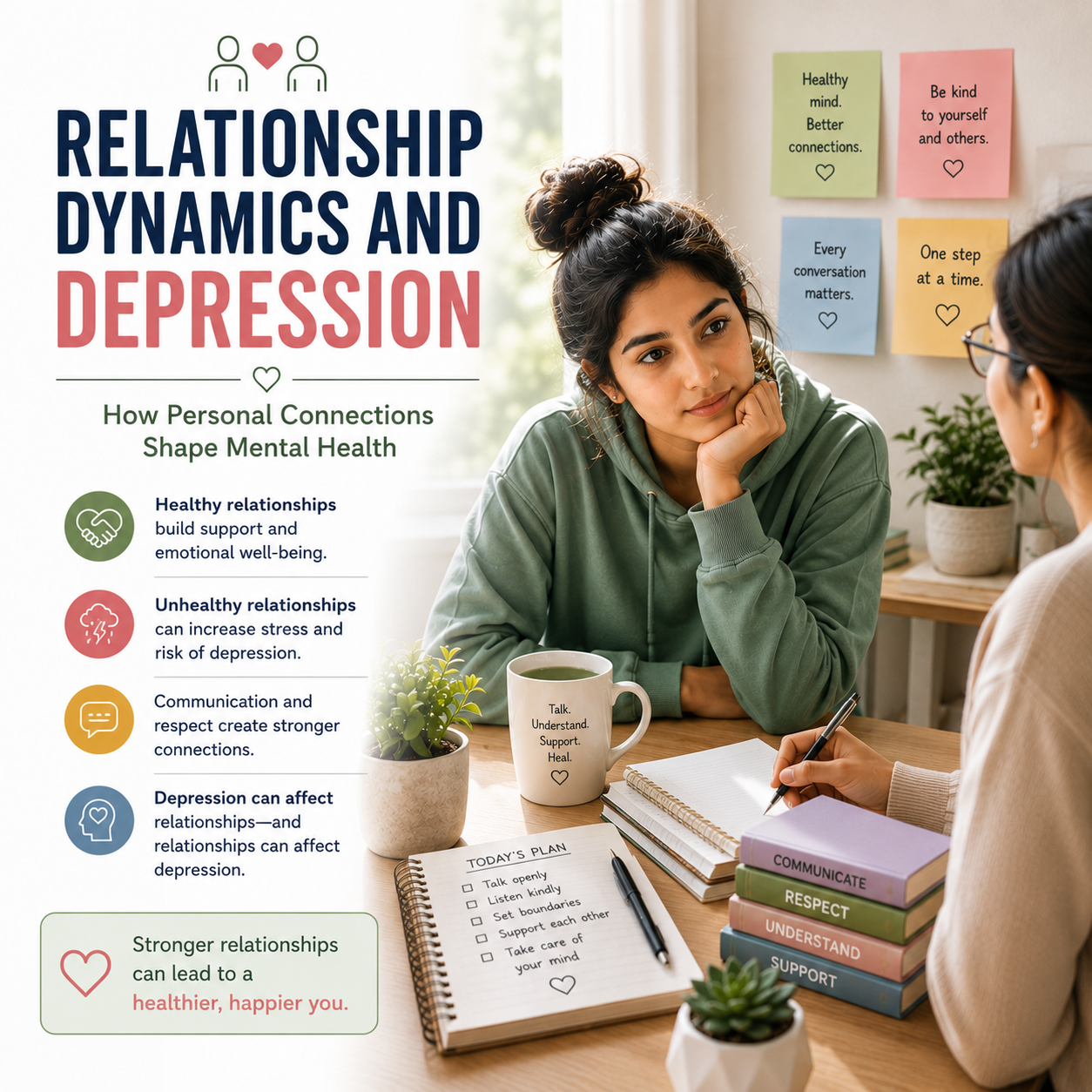
Relationship Dynamics and Depression: How Relationships Affect Mental Health
Relationships are important because they provide emotional support, companionship, understanding, and a sense of belonging. People often turn to others during happy moments as well as difficult situations. Supportive relationships can create feelings of security and confidence, helping individuals cope with challenges more effectively.
Why Are Human Relationships Important in Life?.
Human beings are social by nature and naturally seek interaction with others throughout their lives. From early childhood to later stages of adulthood, people continuously build relationships with family members, friends, classmates, colleagues, and partners. These relationships provide emotional experiences that influence how individuals understand themselves and the world around them.
Positive interactions with others can improve emotional well-being and increase life satisfaction. Feeling respected, accepted, and valued by people around us often contributes to positive emotions and psychological stability.
However, relationships do not always function positively. Misunderstandings, emotional distance, conflicts, or unhealthy behaviours can create stress and emotional difficulties. If negative experiences continue over a long period, they may affect emotional functioning and mental health.
Healthy relationships can improve emotional well-being, while unhealthy relationships may contribute to stress, anxiety, and depression. Understanding how relationship dynamics influence mental health can help people recognize unhealthy patterns and seek support when needed. In this blog, we'll explore how relationships and depression are connected and how healthier relationships can support emotional well-being.
Depression is recognized as one of the major mental health concerns affecting individuals across different age groups and backgrounds. Although many biological, environmental, and psychological factors contribute to depression, social relationships also play an important role. Relationships can act either as a source of emotional protection or as a source of stress.
Understanding the connection between relationship experiences and depression may help individuals recognize the importance of maintaining emotionally healthy interactions.
What are Relationship Dynamics?
Relationship dynamics refer to the patterns of interaction and behavior that develop between people over time. Every relationship gradually creates its own style of communication, emotional exchange, and problem-solving methods.
Relationship dynamics influence many aspects of interpersonal functioning, including:
· Communication patterns
· Emotional expression
· Trust between individuals
· Conflict resolution styles
· Emotional closeness
· Personal boundaries
· Support systems
These patterns usually develop slowly through repeated interactions and experiences rather than appearing suddenly.
Different relationships may show different dynamics because people have unique personalities, emotional backgrounds, and life experiences.
What Factors Influence Relationship Dynamics?
Many factors can affect how people interact with one another and form emotional connections.
Some important influences include:
· Early Childhood Experiences
Experiences during childhood often shape the way individuals understand relationships later in life. Positive early experiences may encourage trust and security, while difficult experiences may influence future relationship behaviors.
· Family Environment
Family relationships can influence communication styles, emotional responses, and expectations from others.
· Personality Characteristics
Individual personality traits affect how people express emotions and interact socially.
· Cultural Background
Cultural beliefs and values often shape expectations regarding relationships and social behavior.
· Emotional Awareness
The ability to understand and manage emotions may influence relationship quality.
· Previous Experiences
Past experiences may affect how individuals respond in future relationships.
· Expectations
People often enter relationships with different expectations regarding emotional support, communication, and responsibilities.
Because every person’s life experiences differ, relationship patterns also vary from one individual to another.
What makes a Healthy Relationships?
Healthy relationships generally create an atmosphere where people feel emotionally safe, respected, and valued. Such relationships encourage emotional growth and support positive mental health.
Healthy relationships do not mean that disagreements never occur. Differences in opinions and perspectives are a normal part of human interaction. The important factor is how individuals manage these differences.
Some characteristics commonly found in healthy relationships include:
· Open Communication
Communication allows people to express feelings, ideas, and concerns clearly. Honest discussions often reduce misunderstandings and strengthen emotional connections.
· Emotional Support
Supportive relationships help people feel understood during stressful situations. Emotional encouragement may reduce feelings of loneliness and increase confidence.
· Mutual Respect
Respecting another person’s opinions, values, and individuality contributes to stronger interpersonal relationships.
· Trust and Dependability
Trust develops when people consistently provide support and reliability in different situations.
· Healthy Boundaries
Personal boundaries help individuals maintain emotional balance while respecting personal needs and comfort levels.
· Shared Growth
Healthy relationships often encourage learning, self-improvement, and personal development.
These qualities can positively influence both emotional well-being and relationship satisfaction.
How Do Unhealthy Relationships Affect Mental Health?
Not all relationships create positive emotional experiences. Some relationships become stressful and emotionally difficult over time.
Repeated exposure to unhealthy interactions may influence psychological functioning and emotional well-being.
Examples of unhealthy relationship patterns include:
· Continuous criticism
· Emotional neglect
· Manipulative behavior
· Dishonesty
· Excessive control
· Lack of support
· Ignoring emotional needs
· Repeated emotional conflict
When individuals experience these situations repeatedly, emotional stress may gradually increase.
What Emotional Problems Can Relationship Stress Cause?
Long-term emotional difficulties within relationships can affect individuals in several ways.
Possible emotional consequences include:
· Feelings of loneliness
· Reduced self-confidence
· Emotional exhaustion
· Constant stress
· Sadness
· Anxiety
· Low self-esteem
· Feelings of hopelessness
If emotional distress continues without support or intervention, it may contribute to depressive symptoms.
Can Relationship Problems Cause Depression?
Depression develops due to multiple interacting factors, and relationship experiences can be one of them.
When individuals face repeated relationship problems, emotional strain may increase over time. Stressful relationships can create feelings of rejection, disappointment, insecurity, or isolation.
For example, someone experiencing repeated criticism from others may gradually begin to develop negative thoughts about themselves. Similarly, a person who experiences emotional neglect may feel disconnected or unsupported.
Long-term emotional stress can influence mood, motivation, and daily functioning. Over time, such experiences may increase emotional vulnerability and contribute to depression.
However, it is important to understand that relationship problems alone do not automatically cause depression. Depression usually develops through interactions among multiple biological, psychological, and social factors.
How Does Depression Affect Relationships?
The relationship between depression and social interactions works in both directions. Relationships can influence depression, and depression can also affect relationships.
Depression often changes emotional functioning, behavior, and communication patterns.
Individuals experiencing depression may show changes such as:
· Reduced participation in activities
· Withdrawal from social situations
· Less communication with others
· Reduced emotional expression
· Difficulty concentrating
· Increased irritability
· Low energy levels
· Reduced motivation
These changes may create misunderstandings within relationships because family members or friends may not fully understand what the person is experiencing.
Social withdrawal may increase feelings of isolation, which can create additional emotional difficulties.
How Do Attachment Styles Affect Relationships?
Psychologists suggest that early emotional experiences may influence relationship patterns later in life. Attachment theory explains how early interactions with caregivers may shape emotional behavior in adulthood.
Attachment styles may affect emotional closeness, communication patterns, and trust within relationships.
Different attachment styles include:
· Secure Attachment
Individuals with secure attachment generally feel comfortable with emotional closeness and trusting others.
· Anxious Attachment
Individuals with anxious attachment may frequently worry about rejection and often seek reassurance.
· Avoidant Attachment
People with avoidant attachment may prefer emotional distance and feel uncomfortable depending on others.
· Disorganized Attachment
Individuals with this style may display inconsistent emotional
responses and uncertainty in relationships.
Recognizing these patterns may help individuals understand their own behaviors and improve interpersonal functioning.
When Should You Seek Professional Support?
You may benefit from professional support if relationship stress is beginning to affect your daily life, emotional well-being, or mental health. Consider speaking with a mental health professional if you notice ongoing sadness, frequent conflicts, social withdrawal, feelings of hopelessness, or symptoms of depression that continue for several weeks. Early support through relationship counselling or depression counselling can help you better understand your emotions, improve communication, and develop healthier coping strategies.
Conclusion
Healthy relationships can support emotional resilience, while unhealthy relationship patterns may contribute to emotional stress and depression. Understanding these patterns is the first step toward improving both your relationships and your mental health. If relationship difficulties are affecting your emotional well-being, remember that you don't have to face them alone. At Well Hope, our experienced therapists provide confidential relationship counselling and depression counselling to help you build healthier relationships and improve your overall mental health.
