
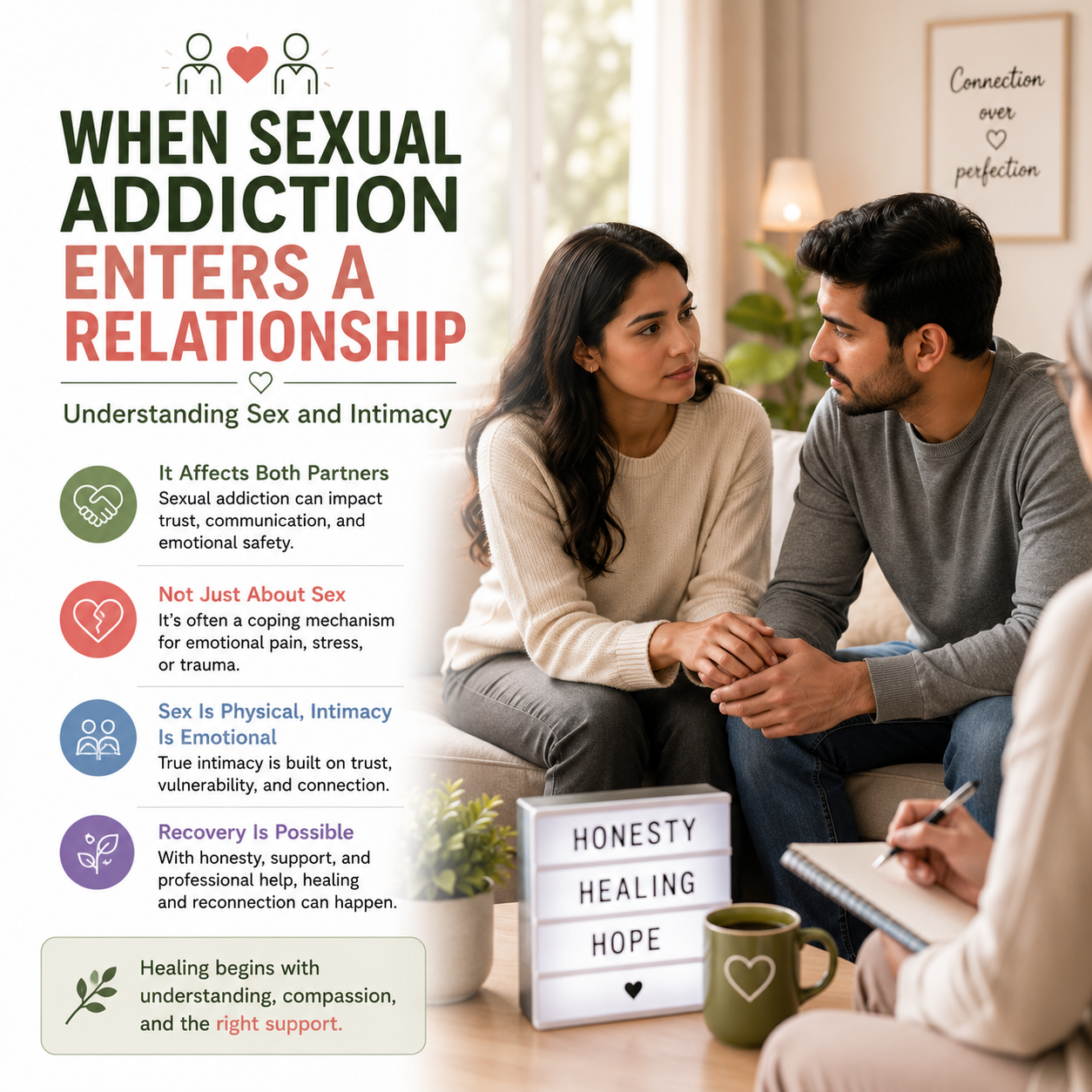
When Sexual Addiction Enters a Relationship: Understanding Sex and Intimacy | WELL HOPE
At WELL HOPE, we often help individuals and couples understand the difference between healthy sexual expression and behaviours that begin to interfere with trust, emotional connection, and daily life. Recognizing the difference between sex and intimacy is often the first step toward healing.
What Is Sexual Addiction?
Sexual addiction is a pattern of compulsive sexual thoughts or behaviours that become difficult to control despite causing emotional distress, relationship conflict, or problems in daily life. It is not simply a high sex drive but a repetitive behaviour often used to cope with difficult emotions.
As a counsellor, I have noticed that many people misunderstand sexual addiction. They often believe it is only about frequent sexual activity, when in reality it is about losing control over sexual behaviours despite negative consequences. Individuals may repeatedly engage in pornography, compulsive masturbation, anonymous sexual encounters, or other behaviours even when these actions create guilt, shame, or damage their relationship.
For many individuals, the behaviour is not driven solely by pleasure. Instead, it becomes a coping mechanism for loneliness, anxiety, unresolved trauma, stress, or emotional pain. While the behaviour may provide temporary relief, these emotions usually return, creating a cycle that becomes increasingly difficult to break.
How Does Sexual Addiction Affect a Relationship?
Sexual addiction affects a relationship by reducing trust, emotional safety, communication, and intimacy. Partners often experience feelings of betrayal, rejection, confusion, and loneliness, even when the relationship appears physically intimate.
One of the most painful aspects of sexual addiction is its emotional impact on both partners. The individual struggling with compulsive behaviours often experiences guilt, shame, and secrecy, while the partner may question their own worth, attractiveness, or ability to satisfy their loved one.
Over time, communication becomes more difficult. Secrets replace honesty, emotional closeness decreases, and misunderstandings become more frequent. Many couples describe living together but feeling emotionally disconnected.
A healthy relationship depends on openness, trust, and emotional security. When compulsive sexual behaviours become the primary coping mechanism, these foundations begin to weaken.
What Is the Difference Between Sex and Intimacy?
Sex and intimacy are not the same. Sex refers to physical activity, while intimacy is the emotional closeness, trust, vulnerability, and connection shared between two people. A healthy relationship usually involves both.
This is one of the most important conversations I have with couples during counselling. Many believe that frequent sex automatically means they have a healthy relationship. However, partners can have regular sexual activity while still feeling emotionally distant.
Intimacy involves being emotionally present, communicating honestly, feeling accepted, and creating a safe space where both individuals can express themselves without fear of judgment.
When sexual addiction develops, physical sex may continue, but emotional intimacy gradually disappears. Sex becomes a way to escape emotions instead of expressing love and connection.
Why Emotional Intimacy Matters
Emotional intimacy helps partners feel valued, heard, and understood. It builds trust and allows couples to navigate stress together. Without emotional intimacy, physical closeness alone rarely creates long-term relationship satisfaction.
What Causes Sexual Addiction?
Sexual addiction often develops through a combination of emotional distress, trauma, mental health concerns, relationship difficulties, and unhealthy coping strategies. It is rarely caused by physical desire alone.
Research suggests that individuals struggling with compulsive sexual behaviours may also experience anxiety, depression, childhood trauma, low self-esteem, or difficulties regulating emotions.
Instead of processing painful emotions directly, some individuals begin using sexual behaviour to temporarily reduce emotional discomfort. Over time, the brain starts associating sexual stimulation with relief, reinforcing the behaviour whenever stress or emotional pain occurs.
Understanding these underlying causes is essential because treating only the behaviour without addressing the emotional triggers often leads to relapse.
What Are the Signs of Sexual Addiction?
Common signs of sexual addiction include loss of control over sexual behaviour, repeated unsuccessful attempts to stop, secrecy, relationship conflict, emotional distress, and continuing the behaviour despite negative consequences.
Some individuals may spend excessive amounts of time engaging in pornography, compulsive masturbation, online sexual activities, or seeking multiple sexual partners despite wanting to stop.
Other warning signs include:
Loss of Control
Feeling unable to reduce or stop sexual behaviours despite repeated efforts.
Emotional Distress
Experiencing guilt, shame, anxiety, or depression after engaging in compulsive sexual behaviours.
Relationship Problems
Frequent arguments, loss of trust, emotional distance, or conflict within the relationship because of sexual behaviours.
Recognizing these signs early allows individuals to seek appropriate professional support before the problem becomes more severe.
Can a Relationship Recover from Sexual Addiction?
Yes, a relationship can recover from sexual addiction when both partners are committed to healing, rebuilding trust, and seeking professional support. Recovery requires honesty, accountability, patience, and emotional connection.
Healing rarely happens overnight. Trust that has been damaged takes time to rebuild.
In counselling, I have seen couples gradually strengthen their relationship by learning healthier communication skills, understanding emotional triggers, establishing appropriate boundaries, and rebuilding intimacy step by step.
Recovery is not simply about stopping compulsive sexual behaviour. It is about creating a healthier emotional connection where sex and intimacy work together rather than replacing one another.
When Should You Seek Professional Help?
Professional help should be considered when sexual addiction begins affecting emotional wellbeing, work, family life, or a relationship. Early intervention often leads to better long-term recovery and healthier relationships.
Many individuals delay seeking therapy because they feel embarrassed or believe they should solve the problem alone. However, sexual addiction often involves emotional patterns that require professional guidance to understand and change.
At WELL HOPE, counsellors work collaboratively with individuals and couples to identify emotional triggers, strengthen coping skills, improve communication, and rebuild healthy intimacy without judgment.
Seeking help is not a sign of weakness—it is a step toward lasting recovery and emotional wellbeing.
