
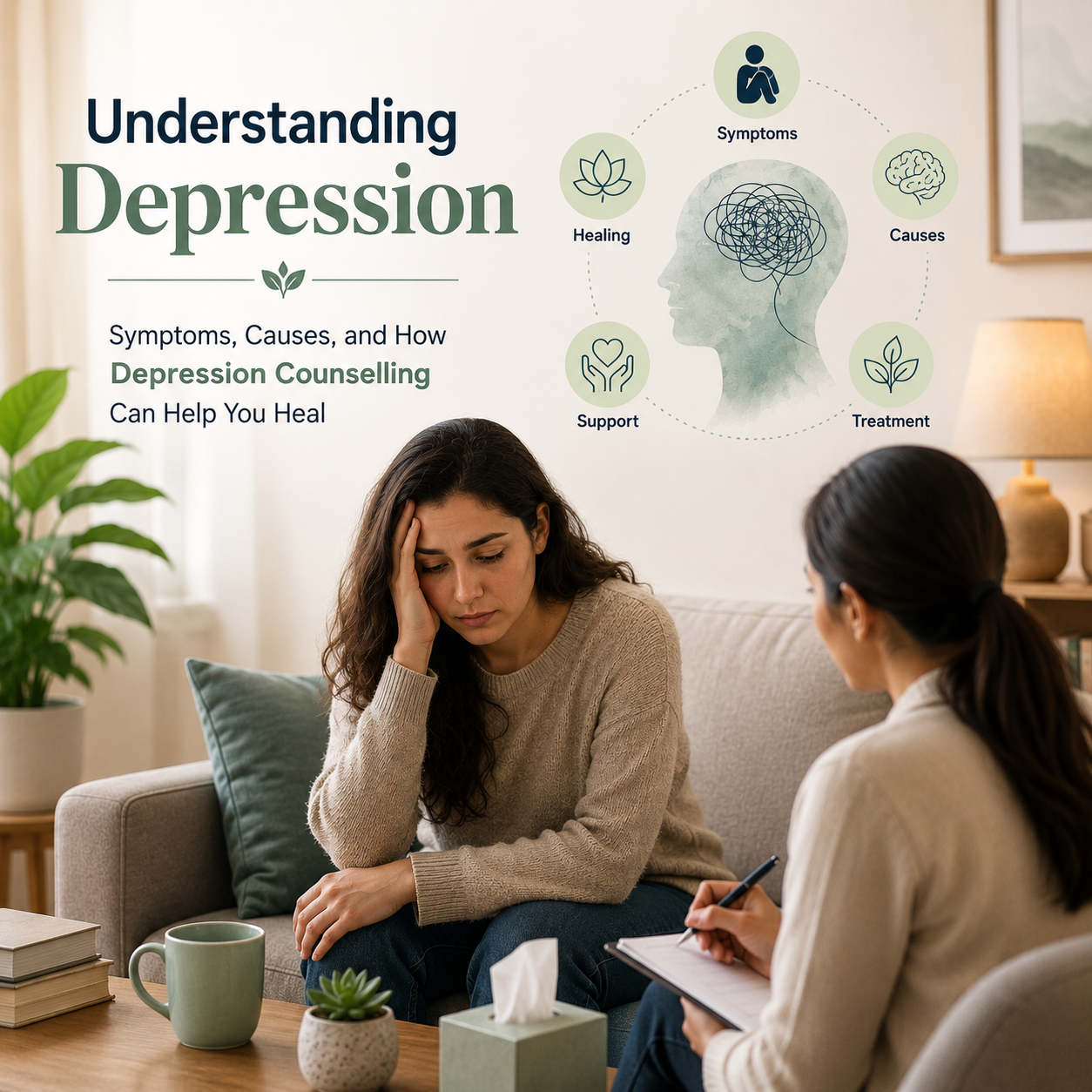
Understanding Depression: Symptoms, Causes, and How Depression Counselling Can Help You Heal
Introduction
Depression is one of the most common mental health struggles people face today, yet it often goes unnoticed until it deeply affects daily life. If you have been feeling persistently low, tired, or disconnected from things you once enjoyed, you are not alone — and support is available. Depression counselling offers a safe, judgment-free space to understand what you are experiencing and to begin healing at your own pace. In this blog, we will gently walk through the signs, causes, and treatment of depression, and explain why counselling plays such an important role in recovery.
What Is Depression?
Depression is more than just feeling sad for a day or two. It is a mental health condition that can affect how a person thinks, feels, and functions in everyday life. It can show up differently for each person — some may feel emotionally numb, while others may feel overwhelmed by sadness, guilt, or hopelessness. Because of this variation, many people don't realize they may be experiencing depression until symptoms have been present for a while.
Depression can affect people of any age, background, or stage of life. While some people experience symptoms after a major life event, others may notice them without any obvious trigger. It is also important to understand that depression is not a sign of weakness or a lack of willpower. Like any other health condition, it deserves understanding, appropriate care, and professional support. Recognizing depression early can make recovery more manageable and improve overall emotional well-being.
Common Signs and Symptoms of Depression
Recognizing the signs of depression early can make it easier to seek support. Some common symptoms include:
• Persistent sadness, emptiness, or a low mood
• Pulling away from hobbies or activities that used to bring joy
• Feeling drained or worn out, even after a full night's sleep
• Difficulty concentrating or making decisions
• Changes in sleep — too much or too little
• Changes in appetite or weight
• Feelings of worthlessness or excessive guilt
• Pulling back from loved ones and avoiding social gatherings
• Irritability or restlessness
Depression doesn't look the same for everyone. Some people continue going to work, caring for their families, and meeting daily responsibilities while silently struggling inside. Others may find even small tasks, such as getting out of bed or replying to messages, feel overwhelming. This is why comparing your experience with someone else's can be misleading. If your emotional well-being has been affected for several weeks, it's worth seeking professional guidance.
It's important to remember that experiencing one or two of these symptoms occasionally does not necessarily mean someone has depression. However, if a few of these signs stick around for more than two weeks and start disrupting everyday routines, it's often a good time to consider talking to a professional.
What Causes Depression?
Depression usually doesn't stem from just one thing. Instead, it often develops from a combination of factors, including:
Biological Factors
Changes in brain chemistry, hormonal imbalances, or a family history of depression can increase vulnerability.
Psychological Factors
Ongoing self-critical thoughts, a lack of confidence, or old emotional wounds left unaddressed can all set the stage for depression.
Life Circumstances
Stressful events such as loss, relationship difficulties, financial pressure, chronic illness, or major life transitions can act as triggers.
Social Factors
Isolation, lack of support, or ongoing conflict in relationships can also play a role in the development and continuation of depressive symptoms.
Understanding these causes with compassion — rather than self-judgment — is often the first gentle step toward healing.
The Role of Counselling in Depression Treatment
Depression counselling plays a central role in helping individuals understand their emotions, identify unhelpful thought patterns, and build healthier coping strategies. Unlike facing depression alone, working with a trained counsellor provides structured, evidence-based support tailored to each person's unique experience. Counselling is not about being told what to do or having your problems solved for you. Instead, it is a collaborative process where you and your counsellor work together to understand your experiences, identify patterns that may be contributing to depression, and develop practical strategies that support long-term emotional well-being. Sessions move at your pace, creating a supportive environment where healing can happen gradually.
How Depression Counselling Helps
• A safe space to talk: Counselling offers a confidential environment to express feelings without fear of judgment.
• Spotting unhelpful thoughts: Evidence-based therapy approaches, such as talk therapy guide people to catch negative thinking and gradually shift it into a healthier perspective.
• Building coping skills: Counsellors help clients develop practical tools to manage difficult emotions and daily stress.
• Personalized support: Every person's experience with depression is different, and depression counselling is tailored accordingly.
• Long-term emotional growth: Beyond symptom relief, counselling supports deeper self-understanding and resilience over time.
Depending on your individual needs, your counsellor may use evidence-based approaches such as Cognitive Behavioural Therapy (CBT), Acceptance and Commitment Therapy (ACT), mindfulness-based techniques, or other therapeutic methods. The approach is always personalised, because every person's experience of depression is unique.
Consistent depression counselling, especially when combined with supportive lifestyle changes and, when appropriate, guidance from a medical professional, can meaningfully improve quality of life. Many people find that having a steady, supportive relationship with a counsellor makes the recovery process feel less overwhelming and more manageable.
When to Seek Help
If you or someone you know has been experiencing symptoms of depression for an extended period, reaching out for support is a sign of strength, not weakness. You don't have to wait until things feel unbearable before asking for help. Many people believe they should only seek counselling when they reach a crisis point, but early support often makes recovery smoother and helps prevent symptoms from becoming more severe. Seeking help early is an act of self-care, not a sign that you've failed. Early depression counselling can help prevent symptoms from deepening and can open the door to a more balanced, hopeful outlook on life.
You Don't Have to Face This Alone
Depression can feel isolating, but healing is possible with the right support. If you're ready to talk to someone who understands, our counselling team is here to listen and walk alongside you at your own pace. Reach out today to schedule a confidential session and take the first gentle step toward feeling like yourself again. At Well Hope, we understand that everyone's healing journey is different. Whether you've recently started noticing symptoms or have been living with depression for some time, our compassionate counsellors are here to support you with confidential, evidence-based care whenever you're ready to begin.
This blog is for informational purposes only and is not a substitute for professional diagnosis or treatment. If you're having thoughts of harming yourself, please reach out right away to a mental health provider or your local emergency service — help is available and you don't have to face this alone.
